How Often Should You Replace a Knife Set?
Replace a kitchen knife set when the blades no longer hold an edge after sharpening, or when handles, rivets or the block fail. For most homes that lands somewhere between 10 and 15 years, not on a fixed calendar date.
On this page (8 sections)
- How long does a good knife set actually last?
- What signs mean it is time to replace the set?
- Does sharpening extend a knife set's life?
- Do built-in sharpeners change the replacement timeline?
- When is a whole set worth replacing instead of one knife?
- Does the type of set change how often you replace it?
- How do you make a new set last longer?
- How often should you replace a knife set in your kitchen?
Replace a kitchen knife set when the blades stop holding an edge after sharpening, or when handles, rivets or the block itself fail. For most homes that lands between 10 and 15 years, so there is no single date to circle on the calendar.
The question of how often should you replace knife set owners ask is really a test: does the set still cut cleanly after a proper sharpening? If yes, keep it.
If the edge fades within a week, the steel is spent.
How long does a good knife set actually last?
A good set lasts 10 to 15 years with hand washing and regular honing, because the steel and the handles are the parts that wear. German-engineered blades like the Henckels Statement line are built to keep a sharp edge with minimal care.
Stamped blades are lighter and thinner than forged ones, so they tend to wear faster under heavy daily chopping. A forged set with a full tang, like the KitchenAid Gourmet, has more metal behind the edge and holds its shape longer.
Care decides the rest. Dishwasher heat and detergent attack handles and rivets, which is why KitchenAid recommends hand washing to extend cutlery life.
Our guide to how long should a knife set last covers the age question blade by blade.
Weight and balance also shape how long a set feels good in the hand. A 15-piece block like the Henckels Statement weighs about 3.9 kg, while the Ninja NeverDull 14-piece system comes in at 7.6 pounds.
Heavier blocks tend to mean thicker forged blades, and those take more sharpenings before the edge thins.
What signs mean it is time to replace the set?
Replace the set when sharpening stops working. If a honing steel and a sharpener both fail to bring the edge back, the hardened layer of steel is gone and no amount of work will restore it.
Watch for these signals:
- The blade bends or chips along the edge after light use.
- A knife rocks or wobbles where the handle meets the blade.
- Rivets are loose, or the handle has cracks that trap water.
- The block has warped slots that rub the blade edges.
- Food sticks and tears instead of slicing cleanly.
One worn knife is not a reason to buy a new set. If only the chef's knife has given up, a single replacement knife costs less than a full block.
Handle failure is the sign people miss. Loose rivets or a cracked handle make a knife unsafe long before the blade gives out, and a set with two or three of those has passed its useful life even if the steel still looks fine.
Does sharpening extend a knife set's life?
Yes, sharpening adds years to a set, but only while there is hardened steel left to sharpen. Every pass removes a little metal, so a blade has a fixed number of sharpenings in it.
Honing is the gentler habit. Running a knife over a steel realigns the edge without removing metal, and you can do it weekly.
A full sharpening with stones or a pull-through tool should be occasional, perhaps once or twice a year for home cooks.
If you sharpen a knife and the edge vanishes in a few days, that blade has reached the end. A set with several blades at that point is due for replacement.
A honing steel included in the block makes the weekly habit easy. The Henckels Statement set ships with a 9-inch sharpening steel, so the tool is already in the slot when the edge needs a quick realignment.
Do built-in sharpeners change the replacement timeline?
A built-in sharpener can stretch a set's working life because it keeps the edge maintained without a separate tool. The trade-off is that the mechanism decides the angle, not you.
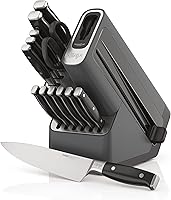
The Ninja NeverDull block holds a stone sharpening wheel that engages the blade each time you swipe the lever. Ninja says the system keeps the edge razor sharp for over 10 years, and the knives are forged German stainless steel.
The built-in route suits cooks who never got around to buying a sharpener. If you already own stones and like using them, a plain block gives you more control over the angle.
When is a whole set worth replacing instead of one knife?
Replace the whole set when three or more knives have failed, or when the block and handles are worn out together. At that point the cost of single replacements climbs past a new mid-range block.
Count what you actually use. Most kitchens lean on the chef's knife, a paring knife and a serrated utility knife.
If those three are healthy and the rest sit in the block year after year, you may not need a 15-piece set at all.
A smaller 3 piece knife set often covers daily cooking and costs less. Our kitchen knife set buying guide explains what each piece in a block is for, so you can judge which slots you would miss.
Matching the set to your habits matters more than piece count. A household that only slices vegetables and bread gets little from a dedicated boning knife, while a household that breaks down whole chickens uses it often.
Replacement cost should follow the knives you reach for, not the ones that fill empty slots.
Does the type of set change how often you replace it?
The set's construction matters more than its age. Forged blades with a full tang hold up longer than thin stamped blades under daily chopping.
Here is how the three builds in this post compare on wear.
Stamped stainless sets
Henckels makes the Statement blades in single-piece, precision-stamped stainless steel. Stamped knives are lighter and easier to maneuver, which suits cooks who prefer a light knife.
The set covers everything a starter kitchen needs: 3-inch paring, 5-inch serrated utility, 5-inch and 7-inch hollow edge santoku, 8-inch chef's, 8-inch bread, six steak knives, a honing steel, shears and a hardwood block. Henckels backs it with a lifetime warranty against manufacturing defects.
Stamped blades are also dishwasher safe according to Henckels, and the stainless steel resists stains and rust. Expect a stamped set to show wear sooner than a forged one if you chop hard every day.
Forged sets with a built-in sharpener
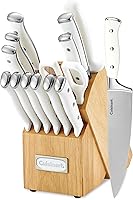
KitchenAid forges its Gourmet blades from imported Japanese steel, hardened and tempered for a long-lasting edge. Forged knives carry more metal, so they can take more sharpenings before the edge thins out.
The 15 pieces include an 8-inch chef, 8-inch slicing knife, 5.5-inch serrated utility, 4.5-inch fine-edge utility, 5-inch santoku, 3.5-inch serrated paring and 3.5-inch paring, plus six steak knives and shears. The contemporary wood block has a built-in sharpener.
KitchenAid says the knives are top-rack dishwasher safe but recommends hand washing and drying right away to extend their life. Follow that and the set should outlast a stamped block used the same way.
Sets that maintain their own edge
The Ninja NeverDull brings forged German stainless steel and a self-sharpening block together. That combination targets the main reason sets get replaced early: a dull edge nobody bothers to fix.
The 14 pieces include an 8-inch chef, 8-inch bread, 5-inch santoku, 5-inch boning, 5-inch utility and 3.5-inch paring knife, six steak knives, shears and the NeverDull block. Ninja backs the set with a 10-year limited warranty.
If you want a set you can hand down without learning to sharpen, this is the shortest path. Our Ninja NeverDull knife set guide breaks down the sizes and which one fits a small kitchen.
How do you make a new set last longer?
Hand wash and dry the knives, even when the maker says they are dishwasher safe. Heat and detergent are the two things that age handles fastest.
Hone the edge weekly with the steel that comes in most blocks. Store knives in the block or on a magnetic strip, never loose in a drawer where edges knock against metal.
Use the right knife for the job, since a paring knife will not survive chopping squash. Cut on wood or plastic boards, not glass or stone, which dull an edge within a few strokes.
Finally, sharpen on a schedule instead of waiting for the knife to tear food. A blade that never gets fully dull needs less metal removed each time, so the edge lasts longer overall.
The block itself needs care too. Wipe it down and let the slots dry fully before knives go back in, since trapped moisture is what warps wood and rusts steel.
A block kept dry protects the set as much as honing does.
How often should you replace a knife set in your kitchen?
Replace it when sharpening no longer holds an edge, when handles and rivets fail, or when the block has worn out, which typically arrives after 10 to 15 years of steady use. A well-kept forged set can outlast that, and a neglected stamped one can fall short.
If you are shopping now, pick the Henckels Statement for a full starter block with a lifetime warranty, the KitchenAid Gourmet for forged Japanese steel, or the Ninja NeverDull if you want the block to sharpen for you. Each one solves the replacement question from a different angle: value, steel and maintenance.
Frequently asked questions
Can I replace just one knife instead of the whole set?
Yes, if only one blade is worn and the rest still cut well. Sets usually share a block and handle style, so an odd single knife may sit awkwardly, but a chef's knife on its own is often the cheaper fix.
Do dishwasher-safe knives really last as long?
They can, but heat and detergent shorten handle life. Henckels says its Statement blades are dishwasher safe and stain free, while KitchenAid recommends hand washing to extend cutlery life.
Hand washing keeps any set going longer.
Is a dull set worth sharpening instead of replacing?
Try sharpening first. If a steel or a home sharpener brings the edge back and it holds for weeks, the set has years left.
Replace when the edge fades within days of sharpening.
Does a built-in sharpener make a set last longer?
It can stretch the useful years of a set. The Ninja NeverDull block sharpens blades at a set angle each time you swipe the lever, which keeps an edge without a separate sharpener.