Kitchen Knife Sets: A Plain-English Buying Guide
Choose a kitchen knife set by the knives you’ll use, the storage you have, and how you’ll keep blades sharp. A chef’s knife, paring knife and serrated bread knife cover many everyday jobs; extra pieces should solve a real need.
On this page (10 sections)
- What should a kitchen knife set include?
- How many knives will you use?
- Which storage style suits your kitchen?
- Does knife style matter when choosing a set?
- What do blade materials and construction tell you?
- How should you compare sharpening options?
- Which kitchen knife set suits each kind of cook?
- What should you check before buying a knife set?
- How do you set up and care for a new knife set?
- How do you choose the right kitchen knife set?
A kitchen knife set makes sense when its useful knives, storage and care tools fit the way you cook. A chef’s knife, paring knife and serrated bread knife cover many everyday jobs; extra pieces should earn their place.
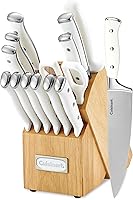
A set can bundle matching knives and storage, but a large piece count may include steak knives, shears and sharpening tools. Compare what you’ll actually use instead of treating the count as a measure of value.
This guide helps you match a set to your cooking routine, counter space and edge-care habits. If you’re still deciding how many blades you need, start with how many knives you really need in a kitchen.
What should a kitchen knife set include?
A useful kitchen knife set starts with a chef’s knife, a paring knife and a serrated bread knife. Add other knives when their shapes match foods you prepare often.
| Knife or tool | What it helps you do | Consider it if |
|---|---|---|
| Chef’s knife | Chop vegetables, slice and handle general prep | You cook meals from fresh ingredients |
| Paring knife | Peel, trim and make small cuts | You often work with small produce |
| Serrated bread knife | Cut bread with a toothed edge | You regularly buy or bake crusty loaves |
| Utility knife | Handle smaller slicing and trimming tasks | You want a middle size between chef’s and paring knives |
| Santoku | Chop and slice with a shorter, broader blade | You prefer its shape and cutting feel |
| Steak knives | Cut food at the table | You serve steak or other foods that need a table knife |
| Shears | Cut herbs, packaging or kitchen items | The included shears suit tasks you already do |
| Honing steel or sharpener | Maintain or restore an edge | You’re ready to learn the tool’s intended use |
A knife count alone doesn’t show how practical a set is. A 15-piece box may include six steak knives and accessories, while a smaller collection may focus on the knives used for daily prep.
Before buying, check blade lengths and shapes, the number of steak knives, and whether storage is included. If you already own a good bread knife or kitchen shears, count those as covered needs rather than reasons to buy duplicates.
A set with a main prep knife you dislike can leave you reaching for an old favorite every day. Choose the chef’s knife or santoku style first, then treat the other included pieces as useful additions only if they fit your routine.
How many knives will you use?
Choose the smallest set that covers your regular cooking tasks. A few useful knives take less space and require less upkeep than a block of pieces you rarely touch.
Think through a normal week of meals. If you mostly chop vegetables, make sandwiches and peel fruit, a chef’s knife and paring knife may cover most prep; a bread knife helps if you buy crusty loaves.
A larger set can suit a household that regularly serves steak or wants matching knives for shared meals. Count the table knives you need, then decide if the added storage and care are worthwhile.
Don’t treat every included piece as a bonus. An unused knife still needs safe storage, and duplicate tools take up space without adding a new job to your kitchen.
Compare a boxed collection with buying the few knives you need individually. Our knife set vs individual knives guide walks through when a bundle is convenient and when choosing separate pieces may fit better.
Which storage style suits your kitchen?
Choose storage that fits your available space and keeps blades secure. A countertop block keeps knives close at hand, while a magnetic holder or protected drawer setup can free counter space.
Is a countertop block right for you?
A countertop block suits cooks who want a fixed home for a group of knives. Measure the counter area and the clearance beneath upper cabinets before choosing one, and check that you can remove knives without hitting a wall or backsplash.
A block is a poor fit when the counter is crowded or its slots encourage you to keep knives you don’t use. Don’t let a full block dictate which knives belong in your kitchen.
Some blocks include a built-in sharpener. That can be convenient when you want an edge-care tool nearby, but check how it works and which blades it can accommodate.
Does a magnetic holder fit your kitchen?
A magnetic holder keeps knives visible and accessible without filling a traditional block. It needs a stable base or suitable mounting spot, along with enough room to place and remove each blade safely.
Check whether it is double-sided and how it holds knives. When storing or removing a knife, keep the sharp edge pointed away from your hand and nearby foot traffic.
A magnetic holder may not suit a kitchen where children can reach the knives or where the wall location is hard to use safely. If you prefer blades behind a cabinet door, choose a protected drawer setup instead.
When does drawer storage work best?
A fitted knife tray or individual blade guards suit kitchens where counter space is limited. Keep each blade separated so its edge doesn’t rub against other knives or utensils.
Drawer storage also helps if you don’t want knives on display. The trade-off is that you need enough drawer space and a way to return every knife to its protected place.
For more storage options, see how to store kitchen knives safely at home. Whatever style you choose, dry knives before putting them away and avoid loose blades in a crowded drawer.
Does knife style matter when choosing a set?
Yes. Blade shape and feel affect how a knife handles, so compare the knives rather than choosing by a country label alone.
German-style knives are often associated with a more substantial feel, while Japanese-style knives are often associated with lighter, thinner blades. These are general tendencies; the shape and construction of an individual knife matter more than the label.
A chef’s knife is a familiar all-purpose shape. A santoku has a different profile that some cooks prefer for chopping and slicing, while a nakiri is shaped for vegetable prep.
Match the set’s main knife to the work you do most. If you prefer a short, broad blade for chopping, a santoku may feel more natural than a longer chef’s knife.
Our German vs Japanese knives guide explains the broad style differences. For more detail on the main all-purpose blade, read how to choose a chef knife.
What do blade materials and construction tell you?
Material and construction give clues about care and feel, but neither label alone tells you whether a knife will suit your hand. Compare the blade, handle, balance and care instructions together.
Stainless steel can resist staining and rust, but it still needs cleaning and drying. Some makers use the phrase “high-carbon stainless steel”; our guide to what high-carbon stainless steel means in knives explains the term.
Stamped and forged describe ways blades are made. Neither label by itself proves that a knife will last longer or feel better in your hand.
A full tang means steel extends through the handle. It can affect how a knife feels in use, but it doesn’t replace a comfortable grip or a secure handle.
Handle shape and material matter because they affect how the knife sits in your hand. If you can’t hold a style before buying, compare its grip description and consider whether you prefer a smooth, slim handle or a fuller shape.
How should you compare sharpening options?
Choose a sharpening method you can use correctly and keep up with. An included tool can make care easier, but you still need to learn what it does and follow its instructions.
A honing steel helps maintain an edge between sharpening sessions. A pull-through sharpener or built-in sharpening system works differently, so don’t treat these tools as interchangeable.
A built-in sharpener may suit someone who wants edge care integrated with countertop storage. The Ninja NeverDull and KitchenAid Gourmet sets each include a block with a built-in sharpener.
A honing steel is useful only if you know how to use it safely and your knife’s edge suits that method. If you’d rather use a separate tool, choose one compatible with your knives instead of buying a set for an unfamiliar sharpener.
For a closer look at integrated sharpening, see knife sets with a built-in sharpener. The main question is whether you’ll use the tool routinely, not whether the feature sounds convenient.
Which kitchen knife set suits each kind of cook?
The right kitchen knife set depends on which knives, storage and care features fit your routine. These five examples offer distinct combinations; none requires every cook to choose a large block.
The Henckels Statement set is a broad countertop option for cooks who want several prep knives and table knives together. Its stamped blades and included honing steel suit someone comfortable with a lighter knife and routine edge maintenance.
Choose it if you want six steak knives and a range of blade shapes in one block. Skip it if counter space is tight or you already own most of the included pieces.
The Ninja NeverDull system suits buyers who want a sharpening mechanism built into their storage. Its range includes a boning knife, which can help if you prepare meat that calls for trimming around bones.
Choose it if you’ll follow the sharpening instructions and want six steak knives. Skip it if you prefer separate edge-care tools or don’t have space for its block.
The KitchenAid Gourmet set suits cooks who want both a chef’s knife and a slicing knife, along with a built-in sharpener. Its forged knives and broad selection offer several shapes for different prep jobs.
Choose it if those extra knives fill gaps in your kitchen. Skip it if you want a compact set or would rather hand-pick a few knives; KitchenAid recommends hand washing and drying to extend the cutlery’s life.
The Hoshanho set suits cooks who want a compact collection of specialty shapes and a magnetic holder. Its nakiri and fillet knives offer options beyond the standard chef’s, paring and bread knife combination.
Choose it if those shapes match your cooking and you have a safe place for the holder. Skip it if a serrated bread knife or steak knives are important to you, since neither is included.
The Astercook set suits buyers who want a broad mix of knives, a bread knife and a built-in sharpener in a hardwood block. Its selection overlaps with other large sets, so compare the pieces with your current collection.
Choose it if you need steak knives and several prep shapes together. Skip it if you want a smaller collection or don’t need another block; follow the care guidance for the knives you use.
What should you check before buying a knife set?
Check the knife selection, storage footprint and care instructions before you buy. These details reveal whether a set fits your kitchen beyond its piece count.
- Count the useful knives: Name the pieces you’ll reach for each week.
- Check blade shapes: Make sure the main prep knife is one you like.
- Measure storage space: Include the block or holder and room to access it.
- Review care needs: Check whether the knives should be hand washed and dried.
- Understand sharpening: Find out what tool is included and how it works.
- Avoid duplicates: Compare the set with knives and shears you already own.
- Check the missing pieces: Make sure the set covers jobs such as slicing bread or serving steak when you need them.
A common mistake is choosing by count and discovering that the extra pieces are mostly duplicates. Another is buying a block that fits the counter but cannot slide out from under the cabinets.
Knives also need a suitable cutting surface and safe storage. Keep blades separated, wash and dry them according to their care directions, and avoid letting edges knock against hard objects.
Many kitchen knives are best hand washed unless the manufacturer says they’re dishwasher safe. Heat, detergent and contact with other items can harm edges or handles; read whether kitchen knives are dishwasher safe before choosing a cleaning routine.
How do you set up and care for a new knife set?
Set up a new kitchen knife set by choosing a safe storage spot, learning each tool, and using the knives on a suitable cutting board. A little planning makes the set easier to use and helps protect its edges.
First, place the block or holder where you can reach it without crossing over a busy prep area. Leave room to remove knives with the blade directed away from your hand, and keep the setup out of children’s reach.
Before the first use, identify each knife by its shape and intended job. Use a bread knife for crusty loaves, a paring knife for small trimming work, and the main prep knife for general chopping instead of forcing one blade to do every task.
Use a cutting board that won’t make the edge strike a hard surface. Avoid using kitchen knives to open cans, pry lids or cut through frozen food unless the knife is designed for that job.
Wash knives soon after use, then dry them before returning them to the block or holder. If the manufacturer permits dishwasher cleaning, still separate knives from other utensils and follow the specific care directions.
Learn the included sharpener before using it. Make sure you know which knives it accepts and how to position them; if instructions are unclear, use a compatible sharpening method you understand.
How do you choose the right kitchen knife set?
Choose the kitchen knife set that covers your regular prep, fits your storage and offers care tools you’ll use. Start with the main prep knife, then add storage, steak knives or specialty blades only when they solve a real need.
Pick the Henckels Statement set if you want a broad selection with a honing steel and six steak knives. Choose Ninja NeverDull or KitchenAid Gourmet if a built-in sharpener is central to your routine and their blocks fit your counter.
Pick Hoshanho if you prefer its magnetic holder and specialty knife mix, including a nakiri and fillet knife. Choose Astercook if you want a full block with a bread knife and built-in sharpener; either may be too much if you need only a few blades.
If your short list still contains knives you won’t use, compare it with a smaller option in our best 3-piece knife sets guide. Let your weekly cooking, available storage and willingness to care for each blade decide which kitchen knife set earns a place in your home.
Sources
Frequently asked questions
What knives should a kitchen knife set include?
Start with a chef’s knife, a paring knife and a serrated bread knife. Add a utility knife if you often cut small foods, and steak knives if you serve steak at the table.
Choose extra pieces only when you know how you’ll use them.
Are more pieces in a knife set better?
More pieces can mean more options, but the count may include steak knives, shears, a block and sharpening tools. Compare the actual knives and accessories with your cooking habits, then check that the storage fits your counter or drawer.
Is a built-in knife sharpener useful?
A built-in sharpener can make routine edge care easier if you want the tool stored with your knives. Check which knives it can sharpen and follow its instructions.
A honing steel, pull-through sharpener and stone serve different roles, so they aren’t interchangeable.
Should I choose German or Japanese style knives?
Choose by the feel and cutting style you prefer. German-style knives are often described as more substantial, while Japanese-style designs can be lighter and thinner.
These are broad patterns, not rules for every knife; compare each knife’s shape, edge and care needs.
How should I store kitchen knives?
Store knives with their edges covered and blades kept from sliding around. A block, magnetic holder, blade guard or fitted drawer insert can work if it suits your space and keeps knives secure.
Dry knives before putting them away.