German vs Japanese Knives: Which Style Suits You? (October 2026)
Choose German knives for a versatile set and Japanese knives for a finer edge. Your best fit depends on the cuts you make, how you handle a knife and which edge-care tools you prefer.
On this page (4 sections)
Choose a German knife set for several knife types and Japanese knives for a finer edge. In the German vs Japanese knives choice, your cutting habits and care preferences matter more than a label.
German-style knives can suit broad everyday use, while Japanese knives can suit cooks who value a fine edge and precise cuts. These patterns don't describe every knife from either country.
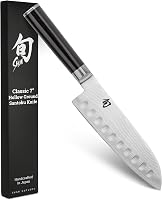
The products here show different options: a German engineered block set, a Japanese-style block set with a built-in sharpener, and a single Japanese chef's knife.

 Best for a Japanese-style block set
imarku Japanese Block Set With Gyutou
German vs Japanese knives: what is the main difference?
German knives can suit varied kitchen tasks, while Japanese knives can suit controlled, precise cuts. The design of the exact blade matters more than its country of origin alone.
Many German-style chef's knives have a curved belly that supports a rocking motion through herbs and vegetables. Some Japanese chef's knives have a flatter profile that can suit push cuts and straight slicing.
Edge angle also varies by model. The Shun Classic chef's knife has a 16-degree edge, and imarku describes its set's edge as 10–15 degrees.
Those figures don't describe every Japanese or German knife.
Steel, blade thickness, heat treatment and sharpening all affect how a knife cuts and holds its edge. Compare the features of the model you're considering.
What does the Henckels set offer?
The Henckels Statement set is German engineered and has stamped stainless steel blades. It includes an 8-inch chef's knife, 5-inch and 7-inch santoku knives, an 8-inch bread knife, six steak knives, shears, a honing steel and a hardwood block.
The honing steel provides a tool for routine edge maintenance. It isn't a substitute for sharpening when a blade becomes dull.
This set suits a kitchen that needs different blade shapes and shared storage. For a closer look at the category, see our guide to German-style knife sets.
What does the imarku set offer?
The imarku set has forged high-carbon stainless steel knives and an 8-inch chef's knife. Its hardwood block has a built-in sharpener, and the set also includes a bread knife, slicing knife, santoku, utility knife, paring knife, six steak knives and shears.
The built-in sharpener offers an integrated way to maintain an edge. Follow the care instructions for the knives when using it.
Choose this set if you want several knives and a sharpening tool built into the block. Our Japanese-style knife sets guide covers more options in that category.
Which style suits your cutting habits?
Choose a knife with a curved chef's blade if you often rock-cut. If you value precise slicing, compare Japanese knives by their edge and blade design.
A curved chef's knife can rock across a board when mincing herbs or dicing onions. If that is your usual motion, this shape may feel natural.
A fine edge can make clean cuts through vegetables and boneless proteins. Use a controlled motion and avoid prying, twisting or striking hard materials with the edge.
Use a stable board, a grip that gives you control and storage that keeps knife edges from knocking against other tools.
Which knife is easier to care for?
The easier knife to care for is the one whose maintenance tools and instructions you'll follow. A honing steel, built-in sharpener or sharpening service can help with upkeep, depending on the knife.
The Henckels set includes a honing steel. The imarku block has a built-in sharpener, while Shun supports the Classic chef's knife with free sharpening and honing.
These are different approaches to edge care. Check the care instructions for a knife before using a steel or sharpener.
For more on matching a knife and sharpening tool, read our guide to knife sharpeners and sets. If you're starting with one blade, our chef knife selection guide explains how size, steel and handle fit into the decision.
Should you choose a knife set or one Japanese knife?
Choose a block set when you need several knife types; choose one chef's knife when you mainly want a single blade for everyday prep. A larger set may include knives you won't use.
The Henckels and imarku sets include chef's, bread, paring and steak knives, plus other tools. Their blocks store the included pieces together.
The Shun Classic is one 8-inch chef's knife. It can cover many prep jobs, but it doesn't include a bread knife, paring knife or storage block.
If you're unsure which blades you need, start with our guide to how many knives belong in a kitchen. It can help you choose pieces that match your cooking.
Which style is a better fit for your kitchen?
Pick a German-style block set if you want several knives and a honing steel; pick a Japanese knife if you want a finer edge for precise slicing. Then compare each model's shape, steel, handle and care needs.
The Henckels Statement set is an option if you want a German engineered block with several knives and a honing steel. The imarku set has a built-in sharpener in its block.
Choose the Shun Classic if one Japanese chef's knife fits your needs better than a full set. To compare individual knives with a block, see our knife set vs individual knives guide.
For more basic terms and blade shapes, visit the knife basics guide.
Frequently asked questions
Are German or Japanese knives better for home cooks?
Neither style is better for every home cook. German knives often suit varied daily prep, while Japanese knives often appeal to cooks who value a fine edge and precise cuts.
Choose based on your cutting habits, grip and care routine.
Are Japanese knives sharper than German knives?
Some Japanese knives use a more acute edge angle than many German-style knives, but angles vary by model. The Shun Classic chef's knife has a 16-degree edge, while imarku describes its set's edge as 10–15 degrees.
Sharpness also depends on maintenance and the specific knife.
Can you use a Japanese knife for chopping?
Yes, a Japanese knife can handle chopping when you use a motion suited to its blade and follow the care guidance for that model. A santoku or gyutou can cover many everyday tasks.
Avoid forcing an edge through hard foods or twisting the blade in a cut.
Do German knives need less care?
Care needs depend on the knife's steel, edge and care instructions, not only whether it is German or Japanese. The Henckels set includes a honing steel, while the imarku block has a built-in sharpener.
Hand washing and drying are practical habits for kitchen knives.
Should you buy a knife set or one chef's knife?
Buy a set if you need several knife types, shared storage and accessories in one purchase. Choose one chef's knife if you already have the basics or want to learn what blade style suits you before filling a block.
Our knife set vs individual knives guide compares those tradeoffs.