How to Store Kitchen Knives Safely at Home
The best way to store kitchen knives is in a fitted holder or under a secure blade guard, where they stay separate from loose utensils. Choose an in-drawer organizer, wall-mounted magnetic bar, or individual guards based on your drawer dimensions, wall space, and how many knives you keep.
On this page (7 sections)
- What is the safest way to store kitchen knives?
- How should you choose an in-drawer knife organizer?
- Is a magnetic bar right for your kitchen?
- When do knife edge guards make the most sense?
- How do you set up and care for knife storage?
- What common knife storage mistakes should you avoid?
- Which kitchen knife storage method should you choose?
The best way to store kitchen knives is to keep every blade secured in a holder or covered with a fitted guard, away from loose utensils and out of children's reach. Choose an in-drawer organizer, a magnetic bar, or edge guards based on your space and the knives you own.
Clean and dry knives before storage. When blades sit loose together, they can bump against other tools, dull more quickly, and become harder to pick up safely.
What is the safest way to store kitchen knives?
Store each knife where its blade can't shift into your hand or another tool. A dedicated holder keeps knives in predictable places, so you can reach for the handle without searching through a drawer.
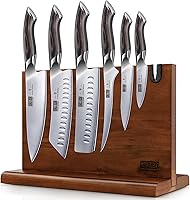
A counter block or drawer organizer holds several knives together. A magnetic bar puts them on a wall, while edge guards cover individual blades for separate storage.
Keep any storage method out of children's reach. If young children can access drawers or the wall area, choose a location they can't reach and secure the drawer when possible.
The right holder also depends on how many knives you use. Our guide to how many knives you need in a kitchen can help you avoid buying storage for pieces that rarely leave the drawer.
How should you choose an in-drawer knife organizer?
Choose an in-drawer organizer when you want knives out of sight and can give them a dedicated drawer. Measure the drawer's inside length, width, and height, then check that the organizer leaves enough room to open and close it without pressure.
The Joseph Joseph DrawerStore Knife Organizer suits a compact setup with up to 9 knives. Its two tiers separate small knives from larger ones, and it fits blades up to 9 inches long in drawers at least 3 inches high.
The Utoplike Bamboo In-Drawer Knife Block is better suited to a larger collection. It has capacity for up to 16 knives, with slots for shorter steak knives and longer knives, plus a center slot for a sharpening steel.
Check the Utoplike's required drawer space before buying: the interior needs to be larger than 17.1 x 12.7 inches and more than 2.3 inches high. Its outer dimensions are 16.6 x 12.2 x 1.8 inches, so measure the drawer itself rather than relying on a rough estimate.
A drawer organizer is a poor choice if it crowds your utensils or makes the drawer difficult to close. Keep knives in their assigned slots, with handles easy to grasp, and don't stack other tools over them.
Is a magnetic bar right for your kitchen?
Choose a magnetic bar if you have a secure wall area and want knives visible without using drawer or counter space. It works best where you can reach a handle without leaning over the blade or brushing past it.
The Modern Innovations Magnetic Knife Bar has a stainless steel surface and includes mounting hardware and illustrated instructions. Its actual length is 15 3/4 inches, so measure the wall area and allow room to place and remove knives.
Mount the bar securely according to its instructions, in a place children can't reach. To put away a knife, bring the flat side of the blade toward the bar carefully; to remove it, hold the handle and roll the blade away rather than pulling the sharp edge toward you.
Skip a magnetic bar if you can't mount it securely or if the only available wall is beside a busy walkway. If you're choosing a knife set around this storage style, compare the options in our guide to knife sets with a magnetic block.
When do knife edge guards make the most sense?
Use edge guards when you need to store or carry knives individually without a fixed holder. They keep covered blades separate in a drawer or utensil case and can make a small collection easier to organize.
The Asaya 11-Piece Knife Edge Guards set includes multiple sizes for knife styles such as paring, steak, boning, bread, santoku, fillet, and chef knives. Each cover has a felt lining and a textured exterior.
Match a guard to one knife at a time. Slide the blade in carefully, then check that the cover stays in place and the tip isn't exposed before storing it.
Skip guards if you want knives ready on a counter or wall, or if you need a permanent organizer for a large collection. They also need enough space to sit flat without being crushed under heavy kitchen tools.
How do you set up and care for knife storage?
Start with clean, dry knives and a storage space that fits each blade. Measure before buying, clear the area, and arrange knives so you can lift them by their handles without moving other tools first.
For a drawer organizer, place it on a level surface and sort knives by size. Keep smaller knives in their intended slots and check that longer blades fit without hitting the drawer when it closes.
For a wall bar, follow the included mounting instructions and check that the wall gives you room to attach and remove knives safely. For edge guards, match each cover to its knife and store the covered blades where they won't slide or get crushed.
The Joseph Joseph organizer should be washed and dried by hand. For other holders, follow their care directions and keep the storage area clean and dry.
What common knife storage mistakes should you avoid?
Don't put wet knives away, toss uncovered blades into a drawer, or force a knife into a slot or guard that doesn't fit. These habits can leave blades exposed, cause them to knock against other tools, or make retrieval awkward.
Avoid buying an organizer before checking drawer dimensions. A tray that fits on the counter may still be too tall or wide for the drawer you plan to use.
Don't mount a magnetic bar where people can bump into the blades, and don't leave knives at a height children can reach. Keep handles clear so you can pick up each knife without touching its edge.
Hand-wash knives when their care instructions call for it, then dry them before storage. See our guide to whether kitchen knives are dishwasher safe for more on knife care.
Which kitchen knife storage method should you choose?
Pick the Joseph Joseph tray for a compact drawer, the Utoplike block for a larger knife collection, the Modern Innovations bar for a safe wall mount, or Asaya guards for individual covers. Your drawer dimensions, available wall space, and number of knives should settle the choice.
Choose a drawer solution when knives should stay out of sight. Choose a magnetic bar when you have a secure, child-inaccessible wall area and want to keep counters clear.
Choose edge guards when you need flexible storage for a few knives or want to carry them.
Whichever option you use, keep blades clean and dry, return them to the same place, and store them beyond children's reach. For more help choosing and caring for knives, start with our kitchen knife guide.
Frequently asked questions
Is it safe to store knives loose in a kitchen drawer?
No. Loose knives can shift under other utensils, leaving blades hard to see and risky to reach for.
Use a fitted organizer or cover each blade with a guard, and keep the drawer secured from children.
Until you have a holder, keep knives separate in a stable place where no one needs to reach blindly.
Are magnetic knife bars safe?
A magnetic bar can keep knives visible and off the counter when it's mounted securely in a spot children can't reach. Attach each knife carefully with the blade facing away from you, and remove it by the handle.
Check the wall and mounting surface before installation, and leave room to handle knives without brushing against the blades.
Should kitchen knives be stored in a block?
A block is a good choice if its slots fit your knives and it suits your counter or drawer. Clean and dry each blade before putting it away, and use a slot that holds the knife securely.
A drawer organizer suits kitchens where you want knives out of sight.
Edge guards work when you need to store individual knives separately.
Do knife edge guards fit every knife?
No. Edge guards come in different sizes and shapes, so match each cover to its blade and check that it stays in place.
Don't force a knife into a cover that's too small or loose.
Store guarded knives so they can't slide around or fall when you open a drawer.