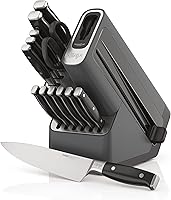
How Much Does a Kitchen Knife Set Cost?
A useful kitchen knife set usually costs between roughly 40 dollars and 600 dollars, and the tier you pick decides how many knives you get and how they're made. Budget blocks cover the basics in stamped steel, while mid-range and premium sets add forged blades, better handles and longer warranties.
On this page (9 sections)
- What does a knife set cost at each budget tier?
- Why does a bigger set not always cost more?
- What does a budget knife set buy you?
- What pushes a set into the mid-range?
- What does a premium knife set cost, and what do you get?
- Does a 3-piece set save money?
- How much should you budget for a knife set?
- What raises or lowers the price within a tier?
- Which tier should you buy?
A useful kitchen knife set usually costs between roughly 40 dollars and 600 dollars, and the tier you pick decides how many knives you get and how they're made. Budget blocks cover the basics in stamped steel, while mid-range and premium sets add forged blades, better handles and longer warranties.
The range is wide because "knife set" covers two very different things. A 15-piece block for a starter kitchen and a 10-piece German set for a daily cook both count, yet they sit at opposite ends of the cost scale.
So the honest answer to how much a knife set costs starts with what you plan to cut and how often.
What does a knife set cost at each budget tier?
Budget sets are the low tier, mid-range forged sets sit in the middle, and premium brand blocks top the scale. The jump between tiers comes from blade construction, handle materials and brand warranty rather than the number of pieces alone.
A budget set can still include a chef's knife, bread knife, utility knife, paring knife, steak knives, shears, a sharpener and a block. A premium set may include fewer pieces for more money because the steel and the name cost more to produce.
The tier matters most for people who cook every day. A budget block handles light use well, but frequent chopping wears a cheaper edge faster.
A mid-range or premium set spreads that wear over more years, so the per-year cost can land close to the budget option.
Why does a bigger set not always cost more?
Piece count says less about price than construction does. A 14-piece stamped set and a 10-piece forged set can cost very different amounts, and the smaller set can cost more.
Blades are either stamped from a sheet of steel or forged from a single piece. Forged knives take more steps to make, which shows up in the price.
Full tang construction and triple-riveted handles also add cost, and those features often appear on mid-range sets.
Steak knives pad piece counts without adding much cutting value. A set with six steak knives looks larger, but those six blades are thin and simple.
Weigh the chef's knife, the bread knife and the paring knife first when you compare what a set really offers.
What does a budget knife set buy you?
A budget set gets you a complete block for a starter kitchen, usually in stamped high carbon stainless steel. It covers the core cutting jobs and adds shears and a sharpener, so you can start cooking without buying tools one at a time.
The Amazon Basics 14-Piece set shows what this tier looks like. It pairs an 8-inch chef's knife, an 8-inch slicing knife, an 8-inch bread knife, a 5.5-inch utility knife and a 3.5-inch paring knife with six 4.5-inch steak knives.
The set also includes 8-inch kitchen scissors, an 8-inch sharpener and a pinewood block.
Full tang construction and triple-riveted handles give the knives a balanced feel in hand. The trade-off is hand washing: Amazon Basics asks you to wash the knives by hand and dry them right away.
This tier suits a first apartment, a rental kitchen or anyone who wants one purchase to cover the basics.
What pushes a set into the mid-range?
Forged blades, bolsters and longer warranties are the usual reasons a set costs more. Those features cost more to make and often come with a lifetime warranty, which lowers the long-term risk of a bad blade.
The Cuisinart 15-Piece Forged Triple Rivet Set is a clear mid-range example. It's forged rather than stamped, and Cuisinart backs it with a lifetime warranty against defects in material and workmanship under normal home use.
That promise is part of what you pay for at this tier.
The set adds a 7-inch santoku and a 2.75-inch bird's beak paring knife to the usual chef, slicing, utility and paring blades. It also includes six 4.5-inch steak knives, an 8-inch sharpening steel, household shears and a wooden block.
The extra-wide bolster gives the hand a stable spot to grip and keeps fingers back from the edge. A forged set like this suits a home cook who uses a chef's knife several times a week and wants the blade to keep its edge longer between sharpenings.
Our kitchen knife set buying guide walks through construction details if you want to compare tiers more closely.
What does a premium knife set cost, and what do you get?
Premium sets sit at the top of the range, and the money goes to brand heritage, steel quality and warranty terms. The piece count often drops while the price climbs, because the maker charges for how the knife is made and where.
The Wusthof Gourmet 10-Piece Block Set fits here. Wusthof is a family-owned German maker from Solingen, and its cutlery carries the Solingen name, a designation reserved for products that meet strict quality standards.
The set carries a limited lifetime warranty.
Gourmet is a stamped line, not a forged one. Wusthof says the precision laser-cut stamped blades are lighter and more economical than its forged Classic line.
That makes this set an entry point into a premium brand rather than its top forged tier.
The 10 pieces include a 6-inch chef's knife, a 5-inch serrated utility knife, a 5-inch spreader, a 4.5-inch utility knife, a 2.75-inch trimming knife, a 2.75-inch paring knife, a 3-inch spear point paring knife, a 9-inch honing steel, come-apart kitchen shears and a block. The chef's knife is shorter than the 8-inch blades in the other two sets, so check that length against your hand and cutting style.
Wusthof asks for hand washing only.
Does a 3-piece set save money?
Yes, when you only use two or three knives. A 3 piece knife set usually costs less than a full block because it skips steak knives, shears and the block itself.
For a small kitchen or a single cook, that's money not spent on pieces that sit in a drawer.
A 3-piece set also leaves room to add the knives you actually reach for later. The catch is storage: without a block, you'll need a magnetic strip, a drawer insert or a knife roll.
If you want the block and the matching set in one go, the larger sets make more sense.
How much should you budget for a knife set?
Set your budget by cooking frequency, not by the biggest piece count you can find. Daily cooks get more value from a forged set or a premium brand than from a larger stamped block.
Occasional cooks can stay in the budget tier and put the savings toward a good honing steel.
Here's a simple way to split it. For light use a few times a week, a budget block covers everything.
For cooking most days, a mid-range forged set earns its keep. For a long-term kitchen where you want a known steel and a lifetime warranty, a premium set is the top tier.
If you cook professionally or run a busy home kitchen, our professional knife set roundup covers sets built for heavier daily use. And if you want to keep the cost low without giving up the block format, an affordable kitchen knife set keeps the spend in the budget tier.
What raises or lowers the price within a tier?
Steel type, handle material, included extras and warranty length move the price inside each tier. Two sets with the same piece count can land in different tiers once you read the construction details.
- Blade steel: high carbon stainless steel holds an edge well and resists rust, and it appears in every tier.
- Construction: forged blades and full tang designs cost more than stamped blades with partial tangs.
- Handles: stainless steel and polypropylene handles are common; the material affects weight and grip more than price at the top end.
- Extras: a sharpener, honing steel, shears and steak knives all add to the total.
- Warranty: a lifetime warranty is part of the premium and mid-range value, so read the terms before you compare.
- Care: hand-wash-only sets need more attention, while some blocks are more forgiving.
A set is a package deal, so price per knife is the fairest comparison. Divide the total by the number of blades you'll actually use, not the number in the block.
That number tells you more about value than the headline piece count.
Which tier should you buy?
Pick the tier that matches your cooking week, and buy the highest score in that tier. For most homes, the Amazon Basics 14-Piece set covers the basics in one purchase.
If you cook most days, the Cuisinart forged set adds a bolster and a lifetime warranty.
For a premium brand name and Solingen steel, the Wusthof Gourmet set is the top-tier choice.
The answer to how much a knife set costs depends on how much cutting you do. A low-cost budget block and a premium German set both cut vegetables; the difference is how long the edge lasts and what the maker promises.
Spend at the level you'll use, and put any savings toward a honing steel or a second chef's knife.
Whichever tier you choose, read the care instructions first. Hand washing and drying right away keeps high carbon stainless steel in good shape and protects the handles and block.
That habit costs nothing and stretches the value of any set you buy.
Frequently asked questions
How much should I spend on a kitchen knife set?
Spend only what your cooking habits justify. A budget block covers everyday chopping for most homes, while mid-range forged sets make sense if you cook daily.
Premium German sets are worth it when you want a long warranty and a brand with a known steel and handle standard.
Is a cheap knife set good enough?
Yes, for light cooking. Budget sets in high carbon stainless steel cut vegetables and meat well, and they sharpen easily.
They dull faster and often skip specialty blades, so replace them or step up a tier once you cook most days.
Why are some knife sets so expensive?
Price tracks steel grade, how the blade is made and where. Forged blades from a single piece of steel cost more to make than stamped ones.
Premium names such as Wusthof add a longer warranty and tighter quality control, and those costs reach the set price.
How many knives do I need in a set?
A chef's knife, a paring knife and a bread knife handle most kitchen work. Add utility and steak knives if you slice a lot or serve meat.
Larger blocks also include shears, a honing steel or a sharpener, which raise the price without changing the core cutting tools.
Do knife sets include a sharpener or honing steel?
Many blocks do. Some include a pull-through sharpener, others a honing steel.
A steel realigns an edge, while a sharpener removes metal.
Check which one your set carries so you know what maintenance tool you still need to buy.
Should I buy a set or individual knives?
Buy a set if you want a block and several matching knives in one purchase. Buy individual knives if you only use a chef's knife and paring knife.
Sets usually cost less per knife, but only when you'll use most of the pieces.