How to Sanitize a Knife Block
To sanitize a knife block, empty it, brush out the slots, spray them with a 1:1 white vinegar and water mix, and let the block dry open-side down for a full day. Wash the knives separately before they go back in.
On this page (10 sections)
- Why does a knife block need sanitizing at all?
- What should you gather before you start?
- How do you sanitize a knife block step by step?
- Should you use bleach or commercial sprays?
- How do you clean and dry the knives themselves?
- How long should a block dry before knives go back?
- How often should you repeat the routine?
- Which blocks are easier to keep clean?
- What mistakes undo a good clean?
- Final word on sanitizing a knife block
To sanitize a knife block, empty it, brush out the slots, spray them with a 1:1 white vinegar and water mix, and let the block dry open-side down for a full day. Wash the knives separately before they go back in.
The job takes about 15 minutes plus drying time. Most smells in a block come from knives put away damp, so the routine matters as much as the spray.
Why does a knife block need sanitizing at all?
A knife block needs sanitizing because the slots stay dark, hold crumbs, and trap moisture from blades that go back slightly wet. That mix of food film and water is what grows the musty smell.
You cannot see inside the slots with a cloth. A brush and a thin spray reach the walls where bacteria and mold settle.
If you're weighing up whether a block is worth keeping, we cover the risks in detail in are knife blocks sanitary. The short version: blocks are fine if you clean them and dry the knives.
The wood itself is not the problem. Moisture and food residue are, and both are easy to remove on a schedule.
A block also sits close to the countertop, where splashes from raw meat, flour dust, and steam from the hob land on the rim. The rim is easy to wipe.
The trouble is that some of that film slips down into the openings, and that is the layer you are targeting when you sanitize.
What should you gather before you start?
Gather a stiff brush, white vinegar, water, a spray bottle, and a clean towel before you empty the block. Add a small bottle brush if the slots are narrow.
You don't need bleach. Vinegar is enough for household use and it doesn't leave a strong smell once the block dries.
Set the block on a towel near the sink so drips land somewhere useful. Keep the knives out of the sink while you work so nobody reaches into a pile of blades.
Work the slots from the top down. That way crumbs fall toward the opening instead of packing deeper into the wood.
Fill the spray bottle half and half so you are not measuring mid-job. A 250 ml bottle is plenty for a full block, and the leftover mix keeps for the next round.
How do you sanitize a knife block step by step?
Sanitize a knife block by emptying, brushing, spraying, and drying, in that order. Each step has a short version below, and the full routine takes about 15 minutes.
- Pull out every knife and set it aside.
- Brush each slot to pull out crumbs and dust.
- Spray the slots with the vinegar mix.
- Wipe the outside with a damp cloth.
- Set the block open-side down to dry for 24 hours.
- Return only clean, fully dry knives.
Don't rush step 5. A damp block undoes the cleaning within a week.
Larger blocks take longer than a small six-knife block, mostly in the brushing. Count the slots and work them in a row so you don't skip one at the back.
How do you get crumbs out of narrow slots?
Use a bottle brush or a stiff pastry brush that fits the slot without scraping the wood. Push in and twist gently, then tap the block on the towel to shake the crumbs loose.
For deep slots, wrap a thin cloth around a chopstick to reach the base. Avoid knives, skewers, or anything sharp that can score the wood and create new places for bacteria to sit.
Vacuum the openings with a narrow nozzle if you want a faster start. Hold the block steady so the tool doesn't chip the rim.
If a slot has a liner or a plastic insert, check whether it lifts out. Many block designs have removable inserts, and those can be washed on their own and dried before they go back.
Does vinegar actually sanitize the slots?
Vinegar lifts food film and gives mild disinfecting help, which is enough for a home kitchen block. Mix equal parts white vinegar and water in a spray bottle and mist each slot.
Let the spray sit for 2 to 3 minutes before wiping the rim. Don't flood the wood; a light mist on the slot walls is the goal.
For a stubborn smell, spray again after the first dry and repeat the next day. Two rounds handle most blocks.
Should you use bleach or commercial sprays?
Skip bleach. Bleach can stain wood and leave residue in a slot that later touches a blade, and a well-scrubbed slot with vinegar already handles household germs.
A food-safe surface spray works if you prefer a ready-made option. Read the label and check it's rated for wood before you spray.
Never soak the block in water or pour liquid into a slot. Wood swells, the block cracks, and the slots loosen around the knives.
Soapy water on the outside is fine. Wipe it off promptly rather than leaving the block wet.
Mild washing-up liquid on a damp cloth is enough for the face and sides. Rinse the cloth well and wring it out before you touch the wood, so you are wiping rather than soaking.
How do you clean and dry the knives themselves?
Wash and dry each knife by hand, then let the blade air for a few minutes before it goes back. That last step is what keeps the block clean in the first place.
A cleaning brush designed for blades keeps your hands clear of the edge. The Joseph Joseph BladeBrush wraps around both sides of a blade at once, so you can scrub safely with one motion.
Rinse it after use and wash it by hand. Its opposed bristles suit long chef knives as well as shorter paring blades.
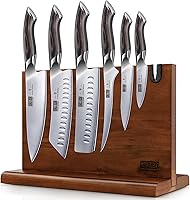
If you'd rather not deal with slots at all, a knife set with magnetic block holds blades in open air and is easier to wipe down. A simple 3 piece knife set can also cover daily cooking without a deep block to clean.
Work along the full length of the blade, not just the middle. Food collects near the heel and around the bolster, and those are the spots that carry the most residue back into a slot.
A wrap-around brush covers both faces in one pass, so the spine and the edge side get the same scrub.
How long should a block dry before knives go back?
Give the block a full 24 hours open-side down in a spot with moving air. A breezy room beats a closed cabinet, and a fan speeds things up.
Stand it so the slots face down and the block rests on its edge or back. Water drains out instead of pooling at the bottom of each opening.
Don't towel-dry the inside of the slots. A cloth pushes lint and moisture into the grain.
If the weather is damp, add a few more hours. The block should feel dry to the touch and have no smell before you reload it.
A block that is still cool or heavy when you pick it up is a sign the inside has not dried. Give it another half day rather than putting knives back into a closed, damp cavity.
How often should you repeat the routine?
Deep clean a block every 2 to 3 months, with a quick brush and spray once a month. Empty it right away if a knife goes in wet.
Wipe the outside more often if the block sits near the stove. Steam and grease settle on the surface.
Check the slots for dark spots at each clean. Those are the first sign that a block needs longer dry time or a different storage spot.
Which blocks are easier to keep clean?
Blocks that come apart or have open storage are easier to sanitize than solid wooden slots. Modular designs let you lift out sections and reach the openings.
The Ninja Premium 11-Piece Set has removable sharpener and steak knife modules that lift off the block. That gives you access to the base for wiping, and the German stainless blades are easy to clean.
Its NeverDull sharpener sits in its own removable piece, so the block base is not crowded by a fixed honing slot. Lifting the modules off also makes the underside and the gaps between sections easy to reach with a cloth.
The Henckels Statement 15-Piece Block Set pairs stamped stainless knives with a hardwood block. It suits cooks who want a full set and are happy to follow a regular routine, and the blades are dishwasher safe.
With a full hardwood block like this, the routine above matters more, because the slots are fixed and cannot be lifted out. Brush them well and give the block its full dry day.
Whichever block you own, the routine is the same. Clean the slots, dry them fully, and keep damp blades out.
When you're ready for a new chef knife, our guide on how to choose a chef knife covers size, steel, and handle fit.
What mistakes undo a good clean?
The biggest mistake is putting a knife back while it's still wet. The second is spraying the block and skipping the dry.
Other habits to drop:
- soaking the block in the sink
- storing it against a damp wall
- using bleach on bare wood
- leaving crumbs in the slots
Final word on sanitizing a knife block
For anyone asking how to sanitize a knife block, the answer is a simple loop: empty it, brush the slots, spray with vinegar and water, and dry it open-side down for a day. Then wash each knife by hand and let it air before it goes back.
Do that every couple of months and the block stays fresh. If it still smells after two rounds, switch to open magnetic storage and check the blades for rust.
Frequently asked questions
How often should I sanitize a knife block?
Clean the slots monthly and do a deeper sanitize every 2 to 3 months. Empty the block and wash the knives right away if you put one away damp, since trapped moisture is what starts the smell.
Can I put a wooden knife block in the dishwasher?
No. Water and heat crack the wood and warp the slots, so hand washing is the only safe route.
Dishwasher cycles are fine for stainless knives, but never for the block itself.
Does vinegar kill bacteria in a knife block?
White vinegar is a mild disinfectant for household surfaces and lifts the film that feeds odor. It is not sterile, so pair it with a good scrub inside each slot and a full dry before the knives go back.
Can a knife block grow mold?
Yes, if knives go in wet or the block sits against a damp wall. Wood and slot liners hold moisture, so dry the blades first and keep the block off the countertop backsplash where steam collects.
Should I throw out a smelly knife block?
Try a vinegar scrub and a long dry first. If the smell stays after two rounds or you see black spots deep in the slots, replace it with an open magnetic strip that airs out.